
Every Other Breath
An Ice Age and the Sixth Extinction

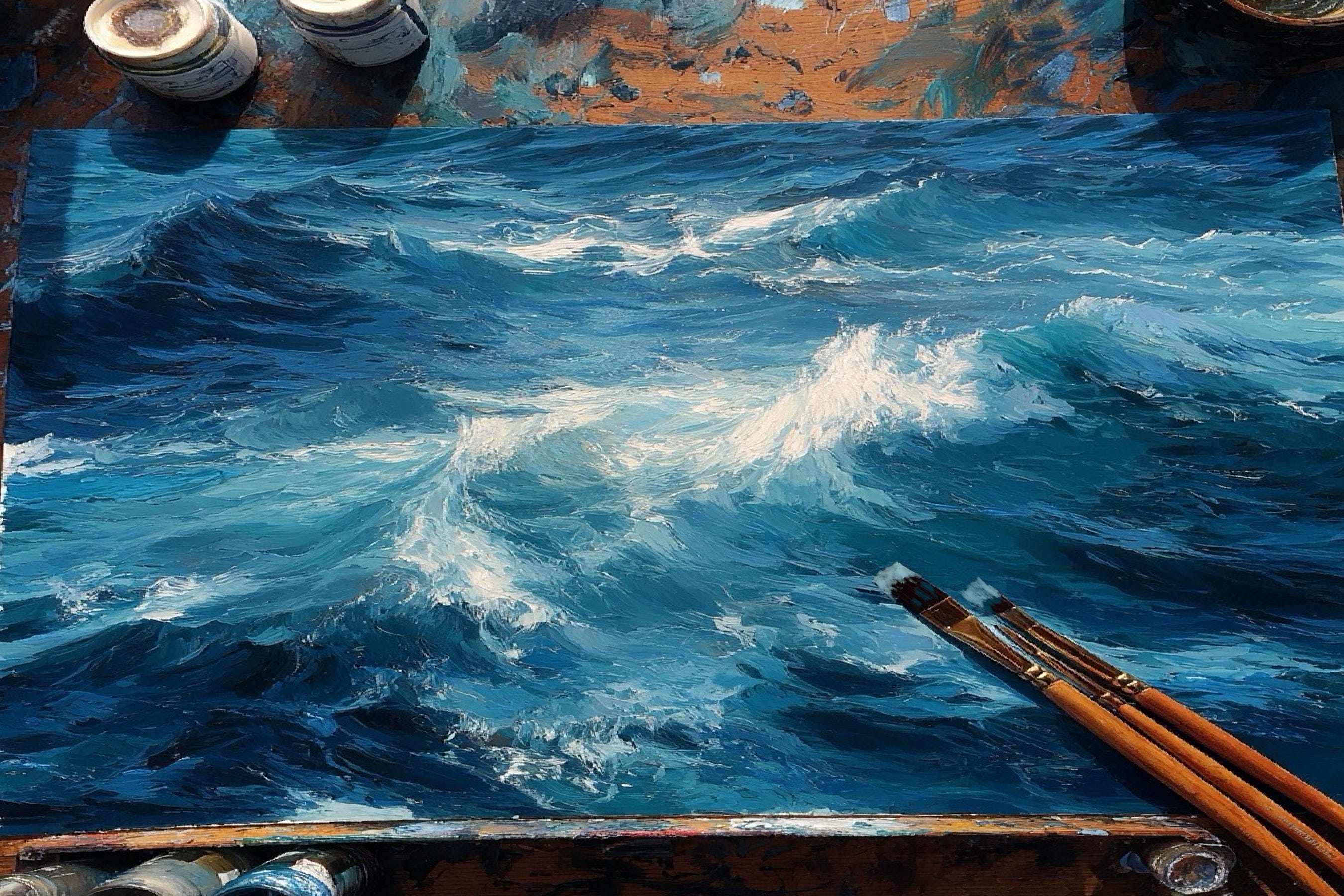
Half of the water in our oceans amassed 4.4 billion years ago when steam escaping our furnace-hot Earth gathered into clouds and, for a few thousand years, delivered near-continuous rain. The rest arrived from space, water-bearing asteroids, and likely an icy comet or two. It was a long accrual: interior water rising as rain, while space boulder after space boulder slammed into the earth and added to the ledger.
Across eons, glaciers rose and melted, seas advanced and retreated, and life was erased and reinvented through five mass extinctions.
Today the ocean covers two thirds of the Earth, and holds 97% of its water. Its average depth is twelve thousand feet. Beneath it runs the planet’s longest mountain range, the Mid-Ocean Ridge, forty thousand miles of volcanic seams, magma bleeding up without pause building new crust, and literally nudging continents apart, millimeter by millimeter. The world’s largest waterfall thunders invisibly in the depths between Greenland and Iceland. And our deepest trench, the Mariana, plunges 35,876 feet, deeper than Everest is tall.
What I am getting at is that this is the largest habitable location on our planet, and since we are in the midst of earth’s sixth extinction, we may need to relocate. Global wildlife populations of vertebrates have shrunk 60–70%. One quarter to one third of known species are now listed as threatened. Harvard biologist, E.O. Wilson, says we lose 3 species every hour. As the Holocene slides into the Anthropocene, and our ice age melts, there will be epic storms.
NOAA reports that more than 80% of the ocean is “unmapped, unobserved, and unknown,” and that we know the Moon and Mars far better than our own seafloor. Technically true, but misleading. The ocean is not neglected, it is a 24/7 planetary research operation, rivaling the Webb Space Telescope in scale.
Research ships crisscross basins, lowering instruments for conductivity, temperature, and depth, the CTDs, the workhorses of oceanography. Autonomous gliders sweep silently through the deep. Moored buoys stream hourly data. Satellites track sea level, color, salinity, biomass. Scientists groundtruth through brutal fieldwork on drifting Arctic floes and Antarctic traverses.
Meanwhile, the ocean itself is working nonstop as Earth’s stabilizer. It produces half the oxygen we breathe. One plankton in particular, Prochlorococcus, the tiniest photosynthetic organism on the planet, creates up to 20% of Earth’s oxygen, more than all tropical rainforests combined. Its success depends on whales, whose colorful, nutrient-rich feces fertilize blooms across the sea. The whale “pump” feeds the plankton; the plankton feeds the world.
The ocean absorbs 90% of excess heat from global warming, sequesters a third of our carbon emissions, and as our ice age warms, we glimpse the gravity of the situation. Our lives are short, less than a second of Earth’s long history. As the fabric of our living world unravels, interspecies listening might be a thread mending toward the solidarity we will need to survive the epic storms ahead.
Thank you for reading. This post sits between PART ONE and PART TWO of Preparing for the Coda Interview.
These articles are accessible to all due to the support of paid subscribers. Whether you can afford to upgrade or not, I am glad you are here.
I loved this global ocean summary Petra, it provides great context for your other two articles. As always, I learned so much! I had no idea the avg depth of our oceans is 12,000 ft, incredible! I will forever have the image of the world largest waterfall thundering underwater, who knew?! And an underwater mountain range that spans 40,000 miles, no wonder it is the largest habitat of our planet and yet almost all of it is unmapped. Your highlight that we lose 3 species every hour truly made me pause and contemplate. Yet again, your writing will now have me looking at the ocean in a whole new light, thank you for taking me on yet another fascinating journey!